

the new internet

Three weeks of no internet. No surfing, scrolling, or delving.
No computer, tablet, or smartphone either.
Just this:
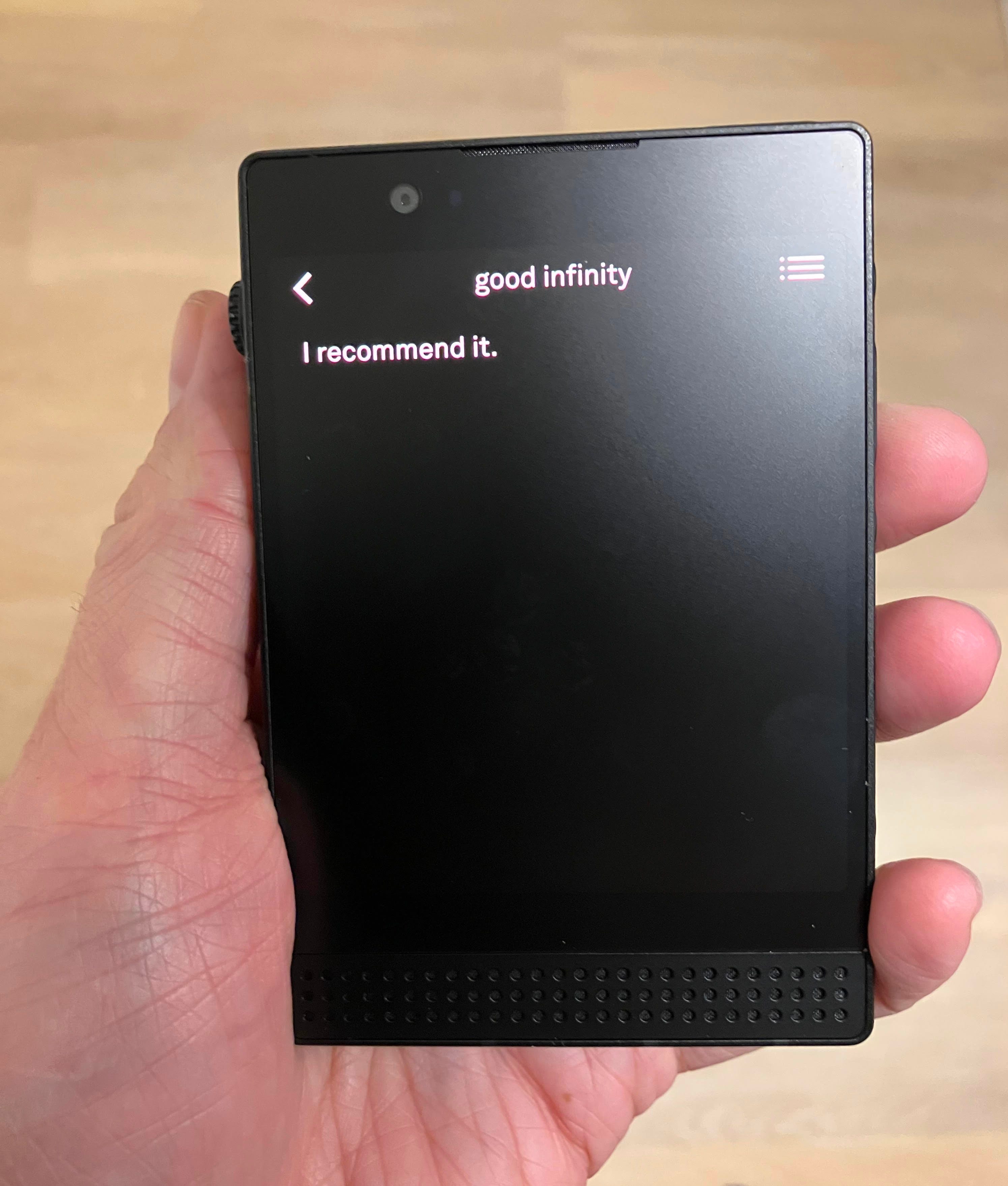
Why? To overcome this1:
Our greatest threat.
It’s subtle, unconscious, and, when capitulated to, potential robbery.
I know this, and yet, I made excuses.
It does provide some benefits after all.
I feel righteously outraged, turned on, and homed in on what makes me feel inadequate on demand.
How I spent my time on my detox was different: church, family, and flânerie, in cold Toronto, just by myself, hunting for cortados with my new dumbphone.
When de-pulled, you notice things, like the most wonderful passages scrawled on Jimmy’s Coffee washroom wall in Kensington.
Taking in all the art, I saw this banger:
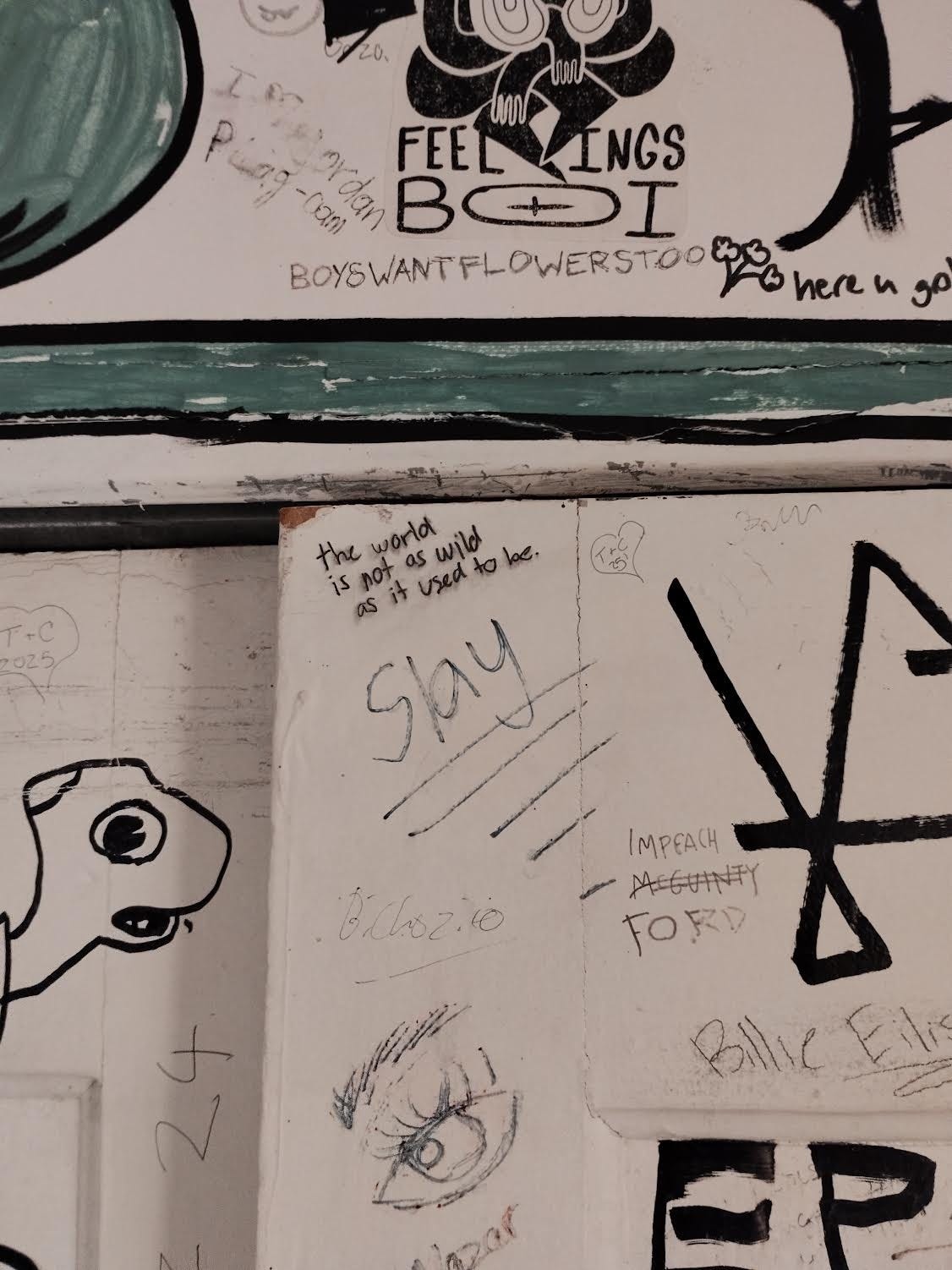
The world does feel less wild.
After making my own artistic contribution, I walked over to Sleepy Pete’s for a sandwich, and the #1 Stoa presentation from last year came to mind: August Lam’s presentation on living screen free (this hero doesn’t even own a computer!)
Gen Z is leading the “analog awakening“ apparently. Rediscovering the art of the good hang. The new status. Being on the Internet is now uncool.
Good for them.
After Sleepy Pete’s I crossed the street to Exile, thrifting vintage clothes, fixated on something August said:
What percentage of our time is being lived? I get weirded out by the fact that we’re reading novels by people who spend most of their lives looking at a screen—you know, that is the view and experience of the world that’s being fed back to us. Then we spend most of our time looking at screens and that’s the content: we are the people surrounding these artists who are then making art out of people who look at screens all day, and they’re looking at screens all day in order to make the art. It’s just weird. I feel like art requires a seed of reality in order to be profound and moving, and we’re living less and less in reality.
This is sad.
In another Stoa session on egregores, an occultist, as if he were speaking directly to me, said:
If you’re constantly on the screen and constantly being stimulated externally, your whole life now suddenly revolves around screen time. It’s very easy to create your own kind of little psychic cabin, which is in many ways not just neurotic but psychotic. It’s neurotic because you don’t want to leave it, and it’s psychotic because your whole life now suddenly revolves around screen time.
This is very sad.
So, let me get this straight: we eye-hop from one screen to another, trapped in our little psychic cabin, then write in our confident voice as if we know it all?
No. It’s time to be de-pulled, for good. It’s getting way too sloppy out.
The cold wind slaps, the only way Toronto weather knows how. It starts to snow gently. It’s slow moving now, the way I like it. In this hesychastic quieting, I reflect on returning to the internet, de-pulled.
I am concerned. Would I get re-pulled?
The spectacle is devilish. It has many moves. One should not get cocky just because they own a dumbphone.
In this unseen war of soul versus spectacle, one has to step up their game. I’ve added more protocols, bought more tools, but the #1 commitment for 2026 will change everything:
No feeding the feeds.
I am not looking at any feeds.
No X, no Notes, not even Ground.News.
The feed is what keeps the surveilled, extractive, and increasingly enshittified Web 2.0 alive.
The relevant philosophical term here is “bad infinity,” Hegel’s term for the process that never goes anywhere but keeps going anyway. It never achieves its potential because it has none.
“You are what you feed” are my watchwords for the year.
I step into Wild Hearts café and hear Web 2.0’s death rattle ring through the patrons’ laptop screens.
The new internet is upon us.
It does seem like we all have to figure out on our own what “good infinity” is—what stretches us yet fulfills us.
Thank God church is tomorrow.

Video courtesy of the great Ari Kuschnir.