Taste 2025

Taste.
Your ability to recognize beauty.
Some people have good taste, bad taste, or so-so taste.
To develop better taste, have a simple practice: list cultural artifacts you found tasteful.
Doing this on a regular basis will encourage you to engage with more tasteful art throughout the year to populate such lists, and to avoid tasteless slop, the path of least attentional resistance today.
That’s the argument from my piece last week, which contained a few amateur theological musings.
Of course, of course, of course, one might say: “beauty is in the eye of the beholder,” “different strokes for different folks,” “there’s no accounting for taste,” blah, blah, blah. These partly true, partly cope adages are important here, as is acknowledging that such lists do not claim that one has good taste, but that one is working toward it.
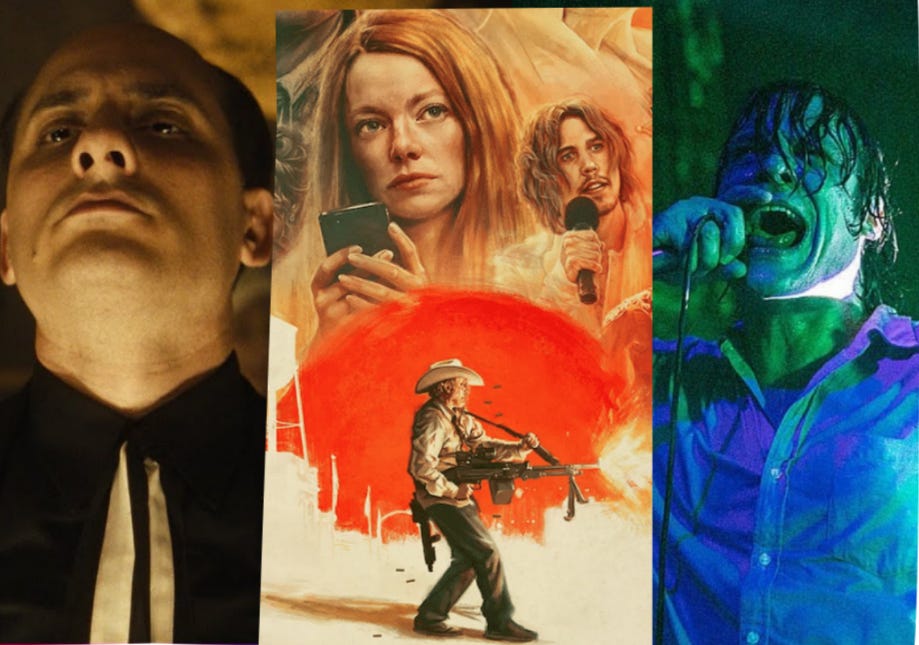
I might do taste entries on a quarterly basis, starting with this one: three films, two shows, and one album that resonated with me most in 2026.
Films
Camille and I purchased a MUBI account a few years back.
Love it.
It’s like Netflix, but with the essence of your local arthouse theatre.
The list will definitely have a MUBI bias, which I recommend for taste cultivation in general.
Mild spoiler alerts ahead.
Lurker
A psychological thriller in which Matthew Morning, a retail worker and secretly obsessed “lurker,” embeds himself in the scene, career, and ultimately the life of up-and-coming pop musician Oliver.
For those who liked my series on “applied cratology,” aka the cultivation of power literacy, this film will be appreciated as a case study in the darker aspects of the “handler” phenomenon—how some celebrities’ entire careers and messaging are managed by manipulative minds that can be quite twisted.
I won’t spoil too much, but the “status–power gap” is on display here. Oliver, whose rising fame initially gives him matching status and power within his circle, has that power taken away through the go-to operation of most sophisticated sociopathic characters…
Watch to find out what it is. Spoiler found down the rabbit hole in the footnote.1
Overall, a brilliant display of bent human psychology.
Grand Theft Hamlet
A surprisingly heartfelt documentary about the staging of Shakespeare’s Hamlet within the online multiplayer game Grand Theft Auto during the Covid pandemic.
Despite being set entirely within a video game, it turned out to be a very watchable film, and hilarious, as the filmmakers attempt to recruit a ragtag group of players amid the chaos of a game known for its indiscriminate killing. This chaos repeatedly interrupts rehearsals for the big show, which is eventually live-streamed on YouTube.
It was also very touching. During Covid, broadly speaking, there were two types of people: those who were lonely and felt isolated, and those who ameliorated that loneliness by finding others online. I experienced the latter with The Stoa, and the filmmakers did with their play within the game.
If you managed to find the others, however briefly, you may have experienced many tender moments, along with the coming and going of people—the joy of their arrival and the sadness of their departure, which happened abruptly.
It was once too soon for Covid films, but 2025 felt like the year to start processing it through art. This was my second-favourite Covid film, my first favourite being …
Eddington
A pandemic-era film set in a small New Mexico town, where tensions between a local sheriff and the mayor heat up amid the culture-war insanity.
Directed by Ari Aster and starring the likes of Joaquin Phoenix, Pedro Pascal, and Emma Stone, this was my favourite film of the year, and the best film of the Covid Moment and recent culture wars.
I started my online career writing about the culture war from a “meta” perspective, and have always found mainstream films and shows disappointing and one-sidedly boring when it came to addressing it.
Not this one.
This is the most accurate and fairest film critical of the craziness of both culture-war polarities, something that, given the reality-tunnel-warping effects of being embedded in one pole, is often poorly captured and thus leaves the culture war misunderstood as a whole.
In general, the culture-war left is concerned with mass disinformation and mass bigotry and sees the Overton window rapidly expanding, while the culture-war right is concerned with mass censorship and mass cancellation and sees the window rapidly narrowing.
The film captures both dynamics, pointing to a common enemy infecting both polarities: what social media and 24/7 screen access have done to us collectively.
Well worth multiple viewings, as many moving parts are at play.
Shows
I’m selective about the shows I watch, as the parasocial investments are too great for Stoic Emos. As a result, I don’t watch many, but I did watch two bangers with Camille.
Mussolini: Son of the Century
A modern retelling of Benito Mussolini’s rise to power.
This show is such a vibe. The music, the style, the performances, especially from Luca Marinelli, who was amazing in films like Martin Eden and masterful in this one with his mesmerizing take on Mussolini.
It’s one of those rare shows that also gestures toward the modern political landscape and, like Eddington, will appeal to both the culture-war left and right. The former will see Trump and other far-right leaders rising in Europe and view the show as an artistic warning about how authoritarianism rises. The latter will be inspired by the strongman ethos and how it can be a ruthlessly effective response to the decadence of the times.
It reminds me of the amazing 2015 film Look Who’s Back, where Hitler (there’s a version on Mussolini as well) is time-travelled to the modern era, becoming a reality TV star, which relaunches his political career. Another rare film that will dually appeal to both polarities of the culture war.
In any case, the show is great, and it shows how, when the political centre cannot hold, socialist and fascistic elements in society compete for power within the political landscape of modernity.
Common Side Effects
An animated comedy about the discovery of a miracle drug that cures all, entangled with corporate greed and governmental conspiracies that cover it up.
This show was so engaging, and even though the characters were quite cartoony-looking, you forget you’re watching a cartoon. It’s a darkly comedic conspiracy thriller in which two high school friends, Marshall and Frances, reconnect after Marshall discovers the Blue Angel Mushroom, a mushroom that cures all illnesses once taken.
Since there is no money in a healed world, they eventually get entangled in a conspiracy involving a pharmaceutical company (!!!) and the government to repress the mushroom. I love critiques of the profit motive of Big Pharma, which noticeably went silent in the mainstream during the Covid Moment (just a coincidence, of course), so I’m glad a series like this is bringing it back.
Music
I realized I only listened to three full albums this year, something I’ll try to adjust next year, as I think something gets lost when you allow the Spotify algorithm to decide what to listen to, rather than sitting down and staying with a musician’s intentional expression in its entirety.
I gave Arcade Fire’s Pink Elephant a listen. Their first three albums had a huge impact on me during my formative years, but unfortunately this new one just isn’t that good, and it feels like Win Butler is processing his cancellation in a needy and apologetic way, which is not the way.
In contrast, the other two albums I listened to were great and were also from two other cancelled artists, to the point of being persona non grata in the indie rock world, who seem to have processed their cancellation in a much more honest and transformative way.
They were ARIEL PINK’s With You Every Night, my second favourite of the year, and my favourite …
John Maus’s Later Than You Think
Maus made his epic return album with a synth-pop sound of spiritual rebirth.
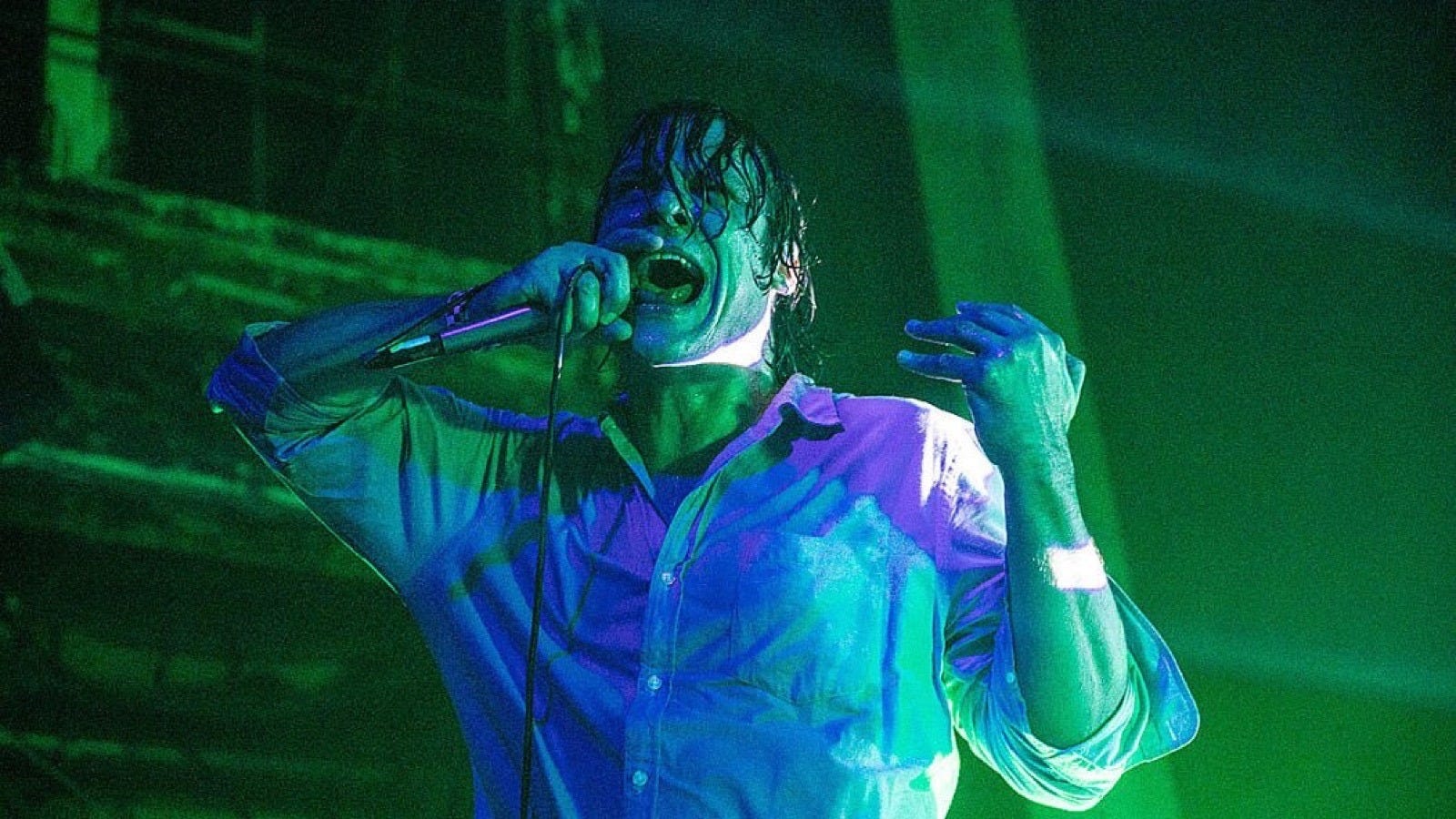
Probably his most powerful album to date, mixing the sacred with futuristic sounds and leading to an equally deeply pensive and emotionally urgent listening experience.
All the songs are good, but the standout for me, and my favourite song of the year, is “Reconstruct Your Life,” the chosen theme song for The Wise Agency experience. It’s a song that puts you, if you allow it, into an in-between place, with one foot situated in the otherworld and the other in this one, inspiring you to step out of the darkness and start anew once again.
Or at least that’s the projection I’m sticking with.
I also suspect he’s becoming an Orthodox Christian, given some of the song titles (“Theotokos”), which might explain my spiritual resonance with his album.
Playlist 2025
You’re welcome.
Bonus: Slide Presentations
Now, let’s take a look at the finest, yet most underappreciated, artistic genre today: slide presentations!
Since this is what The Stoa does best, I’ll highlight the top three slide presentations from the year.
The Age of Unavailability: A Talk w/ August Lamm
Part of the Internet Real Life series earlier in the year, August’s presentation was a standout and totally on brand with her smartphone-free living, as we had an interesting challenge making the session work.
The presentation, handmade and then photographed, argued for a more screen-free life against the trajectory of current technology, offering practical steps on how to make it happen while overcoming the limiting beliefs around its possibility.
August is an inspiration, and I’ll be returning to the spiritual warfare against “The Pull” in 2026, figuring out how to starve the spectacle of Web 2.0, while weaving in “dark forest” and in-person experiences.
Complementary presentations:
HeadOn: Closing the Meta-Perspectival Gap w/ Adam Becker
Adam, the founder of HeadOn, a platform designed for good-faith conversations on contentious issues, is what the Cosmos Institute calls a “philosopher-builder,” someone who builds products with philosophical depth.
I started working with Adam this year, introduced through another philosopher-builder I’m working with, Chappy Asel from The AI Collective, and I’ve been super impressed not only with his obvious agency, but also with his desire to live in integrity with his philosophy, coupled with his ability to update his models of reality quite rapidly.
In 2026, I’m hoping to offer Stoa-as-a-Service to such founders, leveraging collective wisdom toward greater clarity.
Complementary presentations:
Oracular Bodies and the Art of Prophetic Futuring w/ Cheryl Hsu
Wow. Cheryl Hsu. Amazing. This short presentation concluded the Worldview Studies experience, introducing much-needed terms such as oracular bodies, sensing, and culture.
There is so much here that I don’t even know where to begin, but Cheryl is one of the most important emerging mystical artist-philosophers, whose work will be “gotten” and more readily grokked, I sense (or hope… or hope-sense!), within 10–15 years.
If you’d like to get a jump on things, just watch the presentation, then read the paper.
Complementary presentations:
How Does Wisdom Win? Competitive Wisdom for the Third Timeline w/ Welf von Hören
Having a Worldview vs Becoming Mycelial: The Meta- Dialectic w/ Bit Personality
***
In the following entry, I’ll review the “Best of” this Substack, Less Foolish.
